Sunday, July 12, 2015

SOME VARIETIES of WOODS of Indian subcontinent


SOME VARIETIES of WOODS of Indian subcontinent

Post 126   by Gautam Shah ➔


With quality woods getting scarce due to deforestation and restrictions on export and import, attention is now on low quality woods. These are few species that were till now used for low quality products and in rural areas. The species have individual drawbacks that need to need to be technologically handled. This is not an exhaustive list, many such species exist, and are used for specific products. Such species of wood are found across the Indian subcontinent (India, Pakistan, Bangladesh, Sri Lanka, Nepal) or geographically very large subregions of it. These are tropical varieties and may be found in similar climate zones in other parts of the world.
 
Neem Tree in Rajasthan India

NEEM (Azadirachta indica) is also known as Neem, Nim-tree, Sanskrit Nimba, or Indian Lilac. Neem is also called ‘arista’ in Sanskrit to mean ‘perfect, complete and imperishable plant.’ The Sanskrit word Nimba derives from ‘nimbati syasthyamdadati’ meaning ‘to give good health’. It is a tree in the mahogany family Meliaceae. Originally from Burma (Myanmar), but now found almost everywhere in Indian subcontinent, and Iran. It is now planted in parts of Africa and Australia. Neem trees can grow on village outskirts (Gochar or cattle grazing fields), farm borders, and roadsides, singly or as plantation. For the Cart Festival (Rath-Yatra) of Lord Jagannath at Puri, Orissa, India, Specific Neem trees are selected after religious ceremony, cut and used for statues and huge wood cart.
Praying before a tree prior to cutting for Lord cart for Rath-Yatra

Neem trees grow very fast in tropical climates. The tree grows to substantial maturity in a decade, and fully grown can be 12 to 18 mts. tall and can have trunk girths of 1.8 to 2.4 mts. It has a straight trunk and long spreading branches that forming a crown of 20 mts. across. The trunk and branches both offer good wood. It is an ever green tree, providing green leaf for fodder for sheep and goats, whereas its dry leaves and seeds provide organic fertilizer with biocide properties.
 
Grains of NEEM timber

The sap wood of Neem is of lighter colour and the heart wood resembles Mahogany, and is of darker reddish to brownish colour. The timber of a fresh cut is dripping wet, but once sawn begins to season well. After three years of natural drying, or plant-based seasoning, wood dries with shrinkage. Neem timber has medium density. It can be worked but its surface cannot take smooth finish, however it can be painted with suitable surface filling primer. The wood is hard, lustrous and aromatic.
 
Neem timber sawn sections

Neem wood was considered rural timber. It is better then Mango wood, due to the compact grain. Its superior toughness and resistant to moisture, termites, other insects like borers and fungi make it a favourite wood for farm implements, carts, house beams and columns, door and window frames, furniture like charpoys (country beds), cart, axles, ship and boat building, helms & oars, tool handles. It is now widely used for plywood making and as inserts in flush-doors and block-boards.
.

MANGO tree is of genus Mangifera, and belongs to the flowering plant family Anacardiaceae. Mango is a tropical tree, growing in many parts of the world in as many varieties. The English word mango representing the fruit, (pl. mangoes or mangos) originated from the Malayalam word manna via Portuguese during spice trade with Kerala in 1498.
Mango Tree
Mango Tree
Mango trees are grown in every part of India, as single a farm tree or as an orchid. Trees grow to a height of 35–40 mts., with a crown radius of 10 mts. The trees are fairly very sturdy, and bear fruit for very long time. The trunk girth is 1.50 mts. So provide large section of timber. The heartwood is mainly golden brown, to pale-whitish. Sapwood may not be very distinct. The grains are straight, interlocked, curly or mottled. The grains show coarse texture. Mango timbers have porous end grain, which restrict its use for lathe turned articles. Timbers with interlocked or wild grain have tear-out problems during planning or machining. Resins have a tendency to bind on the heated saw or planning blades. Some varieties have high silica content that can dull the cutting edges. 

Mango tree cut section of trunk 
 The timber is of light pale colour but with patchy irregular grains. The open ends of fibres show dark colour. Fresh mango timbers contain lots of moisture and sawn pieces if not properly held for storing and seasoning, have a tendency to warp. Constituent resins make it difficult to saw and plane the timer. Dry timber is very stable and durable. Mango is considered durable to perishable, but also susceptible to moisture, fungal and insect attack.

Mango timber grains
 Mango wood is easily available, and was fairly cheap. It has been truly a country wood used only for rural or farm implements. The wide trunk allows timbers for shelves, door planks, school bench tops, seats, and chair handles. Mango wood cannot have clear polish, mainly due to the irregular grains. Mango wood is used for wood stair and ladder steps when Ironwood or Sadad is not easily available.
.


Tuesday, June 30, 2015

WHAT is a PROJECT ?

 Post -by Gautam Shah
.
A project is a unique endeavour undertaken
  •     to form a concept
  •     to create a product
  •     to render a service


A project could be ‘an idea or concept taking shape in mind, or being readied for an outward expression’, ‘a strategy to actualize an idea’, ‘way to recollect a happening’, ‘estimate the scale of an event’, ‘reproduce an experience’ or ‘a search for a match or fit’.

Mid-sea platform for oil drilling
Project management is unique in character and distinct from other more traditional, routine and bureaucratic means. ‘Projects emerge out of circumstances -aided by all kinds of debate and analysis, by managerial or political policy decisions, -as unique ways of addressing social, business and organizational issues, within increasingly complex environments’.
Herculean task of debris clearing at WTC NY

A project represents unique mix of various conditions so it is a first-ever effort. The effort at sub level involves some degree of repetitions or known conditions. This is very different from processes or operations, e.g. industrial, that are ongoing and do the same thing repeatedly. Even in such situations one can improvise by treating them as unique.
 
Electromagnetic separator for enriching Uranium and Plutonium in USA
 Projects are predominantly either Technical or Procedural, but not exclusively one or the other. Interior Design is an example of the former, whereas marketing or the training of personnel would be an example of the later. In project management what is unfamiliar and non routine, invariably necessitates all kinds of learning, adaptation as well as problem solving, and technical projects need more of it.

Conservation of Historic buildings

Projects have four parameters, Scope (defined space), Time, Cost and Quality (concerns). A small variation in one of these, affects all other factors. Projects are so Scope or extent dependent that an increase or decrease in size affects its time schedules, changes the cost and affects the quality concerns. A Time dependent project when delayed impacts the benefits or losses out of it. A project hastened may require greater or uneconomic inputs and may remain idle till other connected systems are complete. Though with early or accelerated execution, extensive benefits could be derived. Cost generally determines the extent of a project in the early stage, but costs are extremely variable and can change the perception of extent. Quality parameters are worst affected when conditions are abnormal and survival of an individual or the society is threatened, such as during war, natural calamities, catastrophes etc. Best and most challenging projects’ management methods have emerged in such acute conditions.

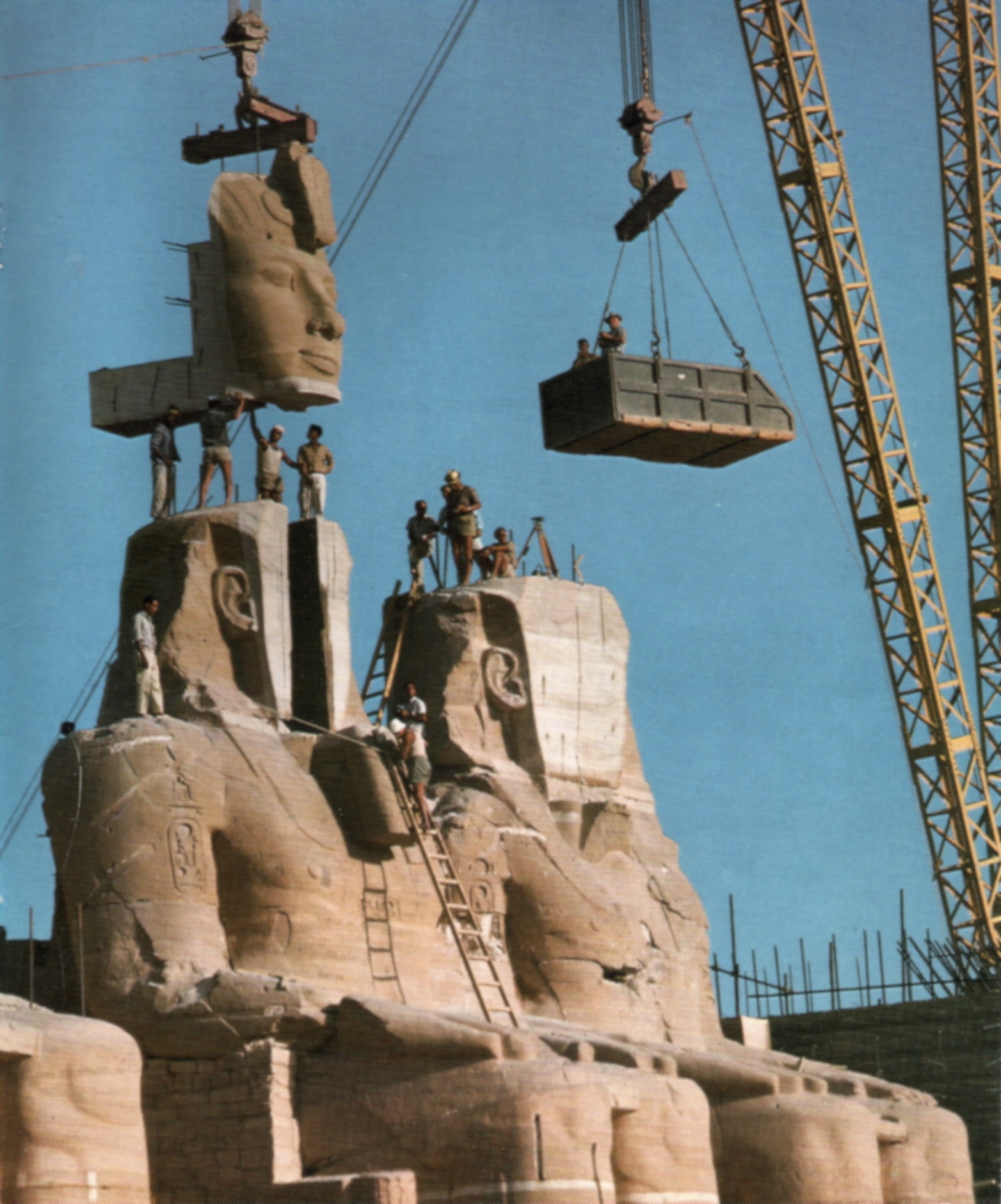
Shifting of Abu Simbel from Nile dam site

Critical Projects: Projects become critical when one or many of the four factors impact. So projects are hypothetically made critical by focusing or de-focusing on one or few of the aspects. A project in critical mode reveals its weak points or inferior sections. A project is considered as weak as its most inferior section, but the project achieves a strength equivalent to the average strengths of all its sections. Project management systems entail recognition of dependencies of the four aspects as risks and provide means for dealing (risk management) with them.

.

Monday, June 15, 2015

CEMENT SURFACE FINISHES

Post 124 -by Gautam Shah


 Cement surface finishes occur in three different conditions:
  • Finishes generated over the cast cement products,
  • Rendered finishes of cements,
  • Cement coatings’ finishes.
The major problem with cement finishes is the consistency of colour over the surface. Other problems happen due to differences in application (casting, rendering or coating), mixing water content and quality and curing processes. The colour differences arise due to many reasons: ingredients used in cement manufacturing, particulate size and its distribution, size and colour quality, proportionate quantity of other ingredients, quality-conditioning additives and mixing procedures.

Cement cast products are plain or steel reinforced structures, pre cast blocks, units, etc. A cement finish of a cast product emerges due to the form-work, compaction, level of vibration (causing aeration), proportion of water and technique of casting (towards gravity, centrifugal or centripetal, short or long depth fall)


Cement Concrete Surfaces can have finishes depending on several factors, such as:
1 Form work surface, joints and continuity, use of a release agent, absorbency of the form work surface and setting or hardening enhancer and retarders used.

2 Concrete mix proportions, ingredients’ colour, size, and texture (lighter toned aggregates and sands produce light-coloured concrete (colour of cement is variable not only from plant to plant but often batch to batch). Degree of mixing and air entrapment affect the colour. Free lime in water creates a soapy foam which also affects the colour.

3 Insufficient or uneven curing affects the hydration and eventually the colour of the concrete.

4 Inadequate vibration causes minor pockets of air bubbles, which affects the texture.

Rendered finishes of cement include plasters, sprays, guniting, masonry pointing, screeds and daubing. These are comparatively of thinner mass. The compaction, if any is part of the application or rendering-levelling by trowels, plasters boards, etc. For rendered finish the surface quality is fairly consistent for small-extent surfaces. For very large surfaces, such as multi-storeyed buildings, the surface differences are noticeable. These anomalies can be reduced by dividing the surface with wide intervening elements of different colour, texture, projections or depressions. Same technique is used for pointing to the masonry faces of stones or bricks. Pointing is designed to enhance the joints’ pattern, as strongly horizontal, vertical, or both. The joint is usually of a contrasting colour and of smoother texture, then the main material surface. A raked joint or protruding joint looks much darker than a flushed joint or flat joint.  
 
Cement is used for creating in-situ and precast floor blocks. Use of fine sands increases the air entraining effect and reduces the work-ability. Angular or flaky sands are difficult to use in sand face plasters.

 
Cement plasters and concrete were new finishes in later part of 19th C and so, architects preferred to experiment its colour and texture. For this old forms were not suitable, and new forms, volumes were tried out. The new material was placed inside and outside, where the illumination, shadows and textures were the key expressions. Entirely a new vocabulary came into being. Brutalism was just one such expression.
 
The mixed mortars are affected by the colour of the aggregates. So it is very difficult to produce a perfectly white marble mosaic tile or washed chips’ plaster unless only pure white aggregates are used. Cement and aggregate flooring such as IPS - Indian Patent Stone, Red Madras floor and Ironite (cast iron milling waste) are all affected by the colour of the constituents. Coloured mortars have pigments of iron oxides (black, red and yellow). Green, blue and other colours (though not sun fast or long lasting) are achieved by use of chrome pigments.

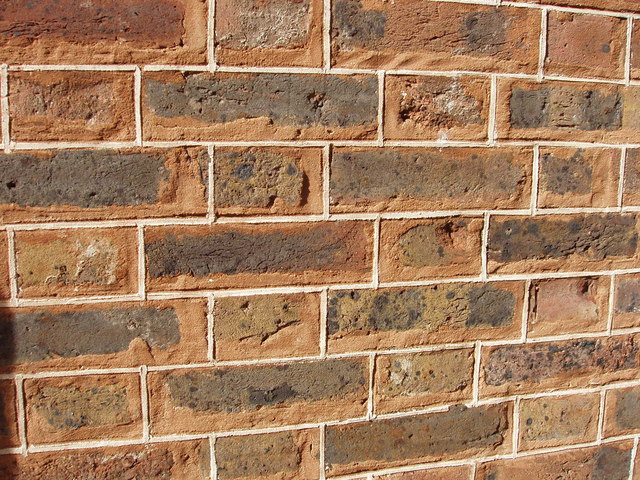
Brick masonry pointing with cement

For vertical and ceiling surfaces ziki plaster formed with marble dust containing substantial amounts of fine mica and talc. Similarly pearl glow and a smooth surface can be achieved by including sea shell dust. Slow setting and engravable cement mortars require high workability, are achieved by addition of fully calcined gypsum or lime containing such compounds.

Cement coatings’ finishes are in the form of cement paints and high viscosity or bodied rendering formulations. Cement paints have limited life of 3-5 monsoons and re-applicability of 5-7 coatings. Cement paints are alkaline materials and applied on similar substrates, and as a result the colour range is mostly of Oxides colours. Some blues and greens of darker range are available. The chief problem is the process of adding the water, which creates flocculation and aerated mass. Next problem is application on a dried out substrates with chances of poor adhesion and difficult brushing. Rendering formulations have high viscosity, and the success usage relies more on the craft of application. 

Cement Surface Finishes have few basic problems:
  • fine hair cracks
  • honey comb voids
  • unbounded loose particles
  • foreign particles stuck on the surface
  • foreign particles deposited on the surface.
  • washable salts leached out from the surface
  • salts and compounds formed over the surface by the constituents of the environment
  • mould and fungi type bacterial growth
  • disengagements from the substrate -peel off.

.

Saturday, May 9, 2015

POSTURES and DESIGNERS

Post 122 -  by Gautam Shah
Human body is continuously in some postural form. Postures are transient body positions. Some occur involuntarily such as in sleep or without one being aware or in control of it. Postures taken with intent are very important for designers. Designers design products with consideration of human postures. An interaction with a product is through perception, recognition, admiration, reach, avoidance or manipulation. Postures allow task handling. Posturing also promotes expression, communication and social encounters with individuals and groups of persons.
 
Postures are taken for change in body position, transition from place to another, for reorientation, for exercise, for relaxation and for engagement with spatial elements. Posturing is at the expense of energy and so we avoid it as much as possible, unless it is for relief of tedium or to regain equilibrium. One can reposition the objects, reshape the surroundings, change the environment, and force recast the connection with other beings or group.

Metric Live at Coachella Music Festival

Most of the body postures occur by the movement of the limbs. But these capacities differ with age profiles, physiological ailments and from person to person. Postures need tools, amenities and facilities. These help in terms of support, rest and for reach.

Similar chairs different postures
Certain body positions, patterns and movements suggest specific emotions. Postures are reinforcing so create empathetic and emphatic images, and so are exploited to gain understanding from others. Postures are also used for offensive and defensive and non-involvement purposes. Postures directly and abstractly convey the state of interpersonal relationships, social standing, personality traits such as confidence, submissiveness, and openness, current emotional state and temperament.


Posture could have many variations within a basic theme. The variations are micro postures or gestures which express or communicate complex concepts metaphorically. Gestures or micro changes of the body help tune in the sensorial perceptions. Gestures are often precursors of major postural changes.

Designers, who create utility products, be they, architects, interior designers, product designers, furniture designers, etc. use postures and posturing capacities as aids for the function system. A posture often requires physical support or an aid. But in many situations a reachable support, its indicative presence or its physical proximity (as an assurance) serves the same purpose.


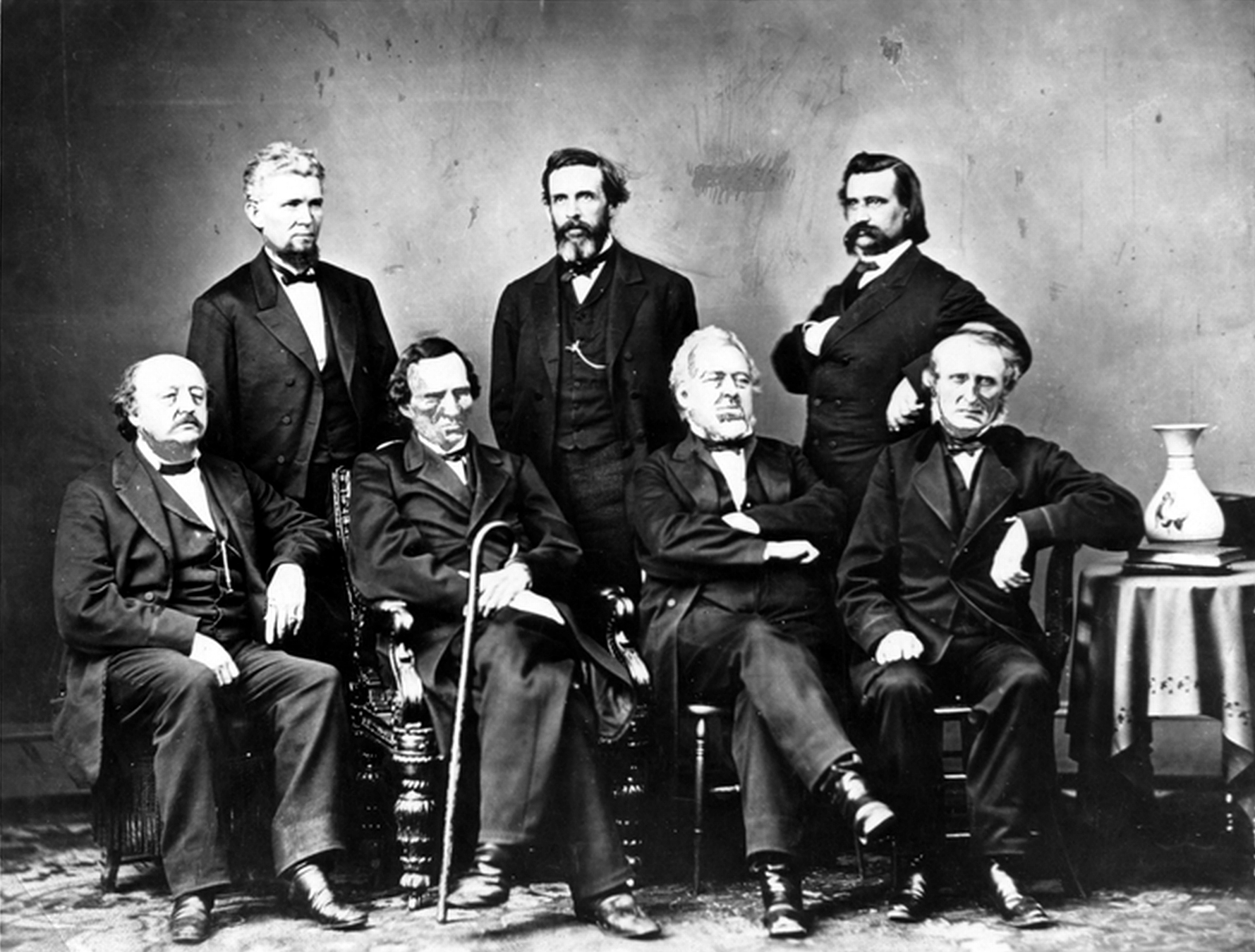
Johnson Impeachment Committee each one in a different posture

Postures’ support structures of tools, amenities, facilities and architectonic elements may not be versatile enough to provide all the required proficiencies, some degrees of personal adjustments are required to achieve the intended purpose. Designers generally select anthropometric design parameters that are purposive to 90 percentile users.

waiting for Bus -different postures 

Designing for postures is not sufficient one must perceive the behaviour happening with it. Normally a designer designs for important poses of behaviour sequences. But some flexibility within the postural pose is required. The flexibility relates to minor changes for relaxation, resetting the body rhythms and facility to conduct momentary postural variations.
 
Postures are axially balanced or skewed. A balanced posture is axially congruent, so is considered nominal position, but not necessarily longer lasting one. A skewed posture reflects the readiness to transit to another posture. This may be due to shift in interest or boredom. Both systems of postures may need some support management. In the first case the support must be subtle, almost imperceptible, but in the second case the support should be obvious one.

.

Wednesday, April 22, 2015

TREE - COUROUPITA GUIANENSIS or CANON BALL or KAILASPATI


COUROUPITA GUIANENSIS or CANON BALL or KAILASPATI 
Post 121 - by Gautam Shah 


These trees are as amazing, as their name “Canon ball” is. Its fruits are like large brown balls held on short twigs, and so appear to grow out of the trunk. Fruits take 8-9 months to ripen, fall and burst open with a loud crack. The flowers are large (up to 60 mm) with six petals, brightly coloured from pink to crimson coloured near the base, and yellowish toward the tips. Flowers have sweet smell at night and in the early morning. The ripe and bust fruit balls give a foul stench, which attracts bees and animals.

Cannon Ball fruits
The tree, bark, leaves and flowers are used to treat hypertension, tumours, pain, inflammation, common cold, stomachache, skin conditions and wounds, malaria, and toothache, etc.


Young tree with fresh leaves April India
These are tall (35 to 50 mts) and erect deciduous trees. The leaves are long like a mango tree. They grow in clusters at the ends of branches. The leaves ripen to reddish colour, shed three times a year. The trees, however, do not remain bare for more than few days, as immediately new leaves appear giving a wonderful variegated green foliage. A tree can bear 1000 flowers per day.

Fresh leaves almost like Mango tree leaves
 The flowers’ bundle resembles “Shiva-lingama hooded snake or a Chhatra of Sheshnag. And for the same reason it is also called " Nag-lingam" or “Shiv-ful” (flower of Shiva). The tree is found in Shiv temple complexes and also Buddhists holy places across Asia.

Flowers of Cannon Ball or Kailaspati / Ling-ful

The tree is of Guinea origin, but is found in many parts of the world. Its popular name is Cannon ball tree. Its botanical name is Coroupita guianensis. In India it is known for 3000 years and known by Kailaspati, Shiv-fal, Shiv-lingi, Nag-lingam, etc. 


.

Friday, April 10, 2015

METALWORKING

Post 120 - by Gautam Shah


Metals are very important materials, because these can be easily deformed into useful shapes, and several times over and over again. The shape, function, and appearance of metal objects are largely determined by the type of metal used. Metals as pure material and as alloys or in mixed states offer innumerable variation of properties. Metals show a wide range of unique characteristics when ‘worked’ over. These ‘working over the metal’ are related to temperatures and stress inductions. Metals also show varied behaviour under different use conditions.
Rusting is an indication How a metal is stressed
Metals begin to change during the conversion processes like casting, forging or rolling. Casting is a melt process but its environment, and cooling-period affect the quality of material. Forging and Rolling, are hot as well as cold processes, which stress the metal and cause alteration in its constituents and their arrangements. In cold working some temperature rise is inevitable. In hot conversion processes the reheating conditions, in-line scale removal, temperature maintenance, and cooling rate, all determine the quality of the product.

Welding heat can cause stresses in metals

There are several processes where unintentional heating of metal occurs. The heating conditions, local or total, include heavy stamping, shaping, forming, shearing, grinding, cutting, welding, and exposure to fire, change the quality of metal material. As these processes are unintentional, the effects cannot be foreseen, and realized in later part of the life of a metal. At such a late stage the section or component is not detachable and replaceable. Unintentional stresses are induced in existing structures when 1. one tries to cutout or attach a component, 2. allow consistent exposure of a structural member (like beam, truss, column, bracket) to fire (of kiln, stove, etc.), and 3. when rusted or damaged parts (such as in automobiles) are removed and replaced with fusion welding.

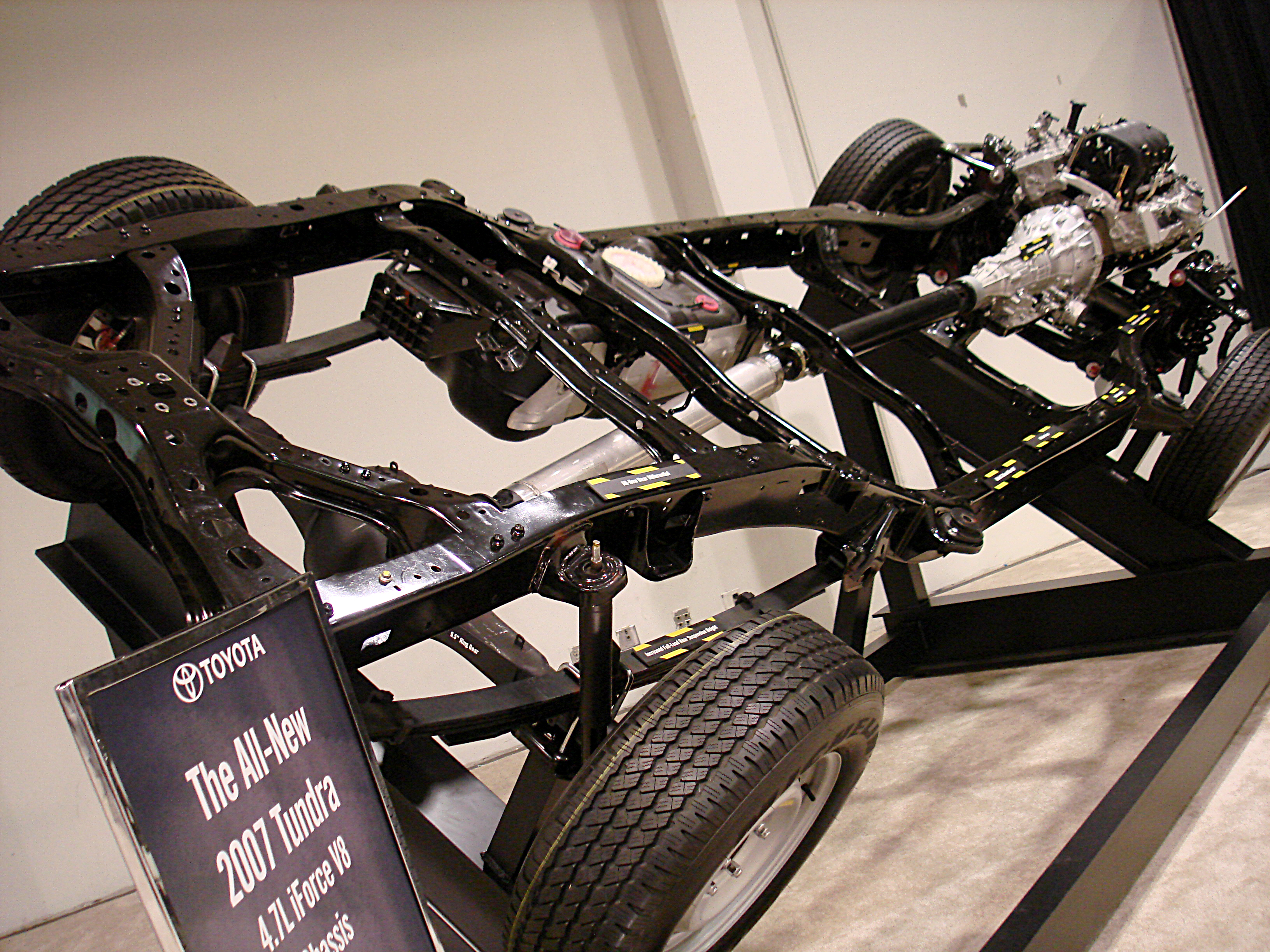
Toyota Tundra Chassis -is de stressed after assembly


Stresses in metal, existing (leftover of earlier processes) or newly set-in, affect the rate of corrosion, paint-ability, metal plating. Sometimes the final pass in hot-rolling generates specific surface patterns, for example, the protrusions on reinforcing bars or checkers on floor plates, ribs. In cold-rolling a specific surface roughness is rolled into strips at the temper mill to improve the deep-drawing operations and to assure a good surface finish on the final product.

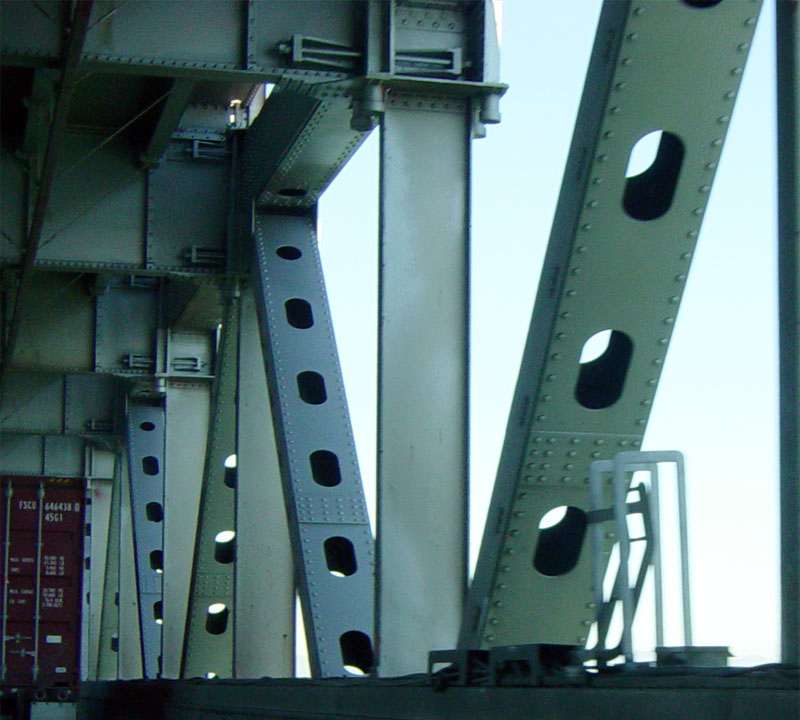
Retro-fitting of Oakland bridge
 

Hundreds of metalworking processes have been developed for specific purposes, but these can be divided into SIX broad groups: casting, rolling, extrusion, drawing, forging, and sheet-metal forming. The first five processes subject a metal to large amounts of strain. However, if deformations occur at a sufficiently high temperature, the metal will re-crystallize, that is, its deformed grains will be consumed by the growth of a set of new strain-free grains. For this reason, a metal is usually rolled, extruded, drawn, of forged above its re-crystallization temperature. This is called hot working, and under these conditions there is virtually no limit to the compressive plastic strain to which the metal can be subjected. Other processes are performed below the re-crystallization temperature. These are called cold working. Cold working hardens metal and makes the part stronger. However, there is a definite limit to the strain that can be put into a cold part before it cracks.
 

Scrape Containers
.

BERNARDO BELLOTTO

  BERNARDO BELLOTTO Post -376 SUNDAY Feature on ART of Architecture -by Gautam Shah BERNARDO BELLOTTO (1720-1780) was born in Venice (d...