FINISHING TECHNIQUES for MATERIALS
Post 111 ⇒ by Gautam Shah ➔
.
Large number of surface finishes evolve during the manufacturing of
materials. These are self finishes, so integral and permanent. Surface-finishes are also obtained by treating Natural materials and secondary
processing of Manufactured materials. Assemblies of materials require
modification of their surfaces, or a new finish to overcome-equalize the
surface quality, and manage the disorder caused by the joints.
There are essentially four methods for creating Surface Finishes. To
achieve a finish for sensorial or technical requirements, one or several
of these methods, are used.
.
1 Techniques for surface finishing from the object itself.
2 Techniques for surface finishing with application of foreign materials.
3 Techniques of micro material deposition (same or foreign) for surface
finishing.
4 Surface modification by secondary processing.
.
It can also be said that finishes are created by physical or chemical
alteration of the surface, by adding new materials, or by removing a
part of the original cover.
Many techniques of achieving surface finishes in use today are essentially
the same as those employed in ancient times. These have been refined
in terms of the tools used and rationalized in terms of procedures.
Many processes are now highly mechanised saving time and energy,
and some even are fully automatized, using robotics that allows faster,
accurate and safer productions.
CUTTING: Cutting is the oldest of all techniques. Cutting is used for fast
division of materials, and quicker removal of parts of materials (skinning,
debarking, chopping, mining). Cutting is a crude, but primary technique
of material finishing.
 |
| Wood cutting |
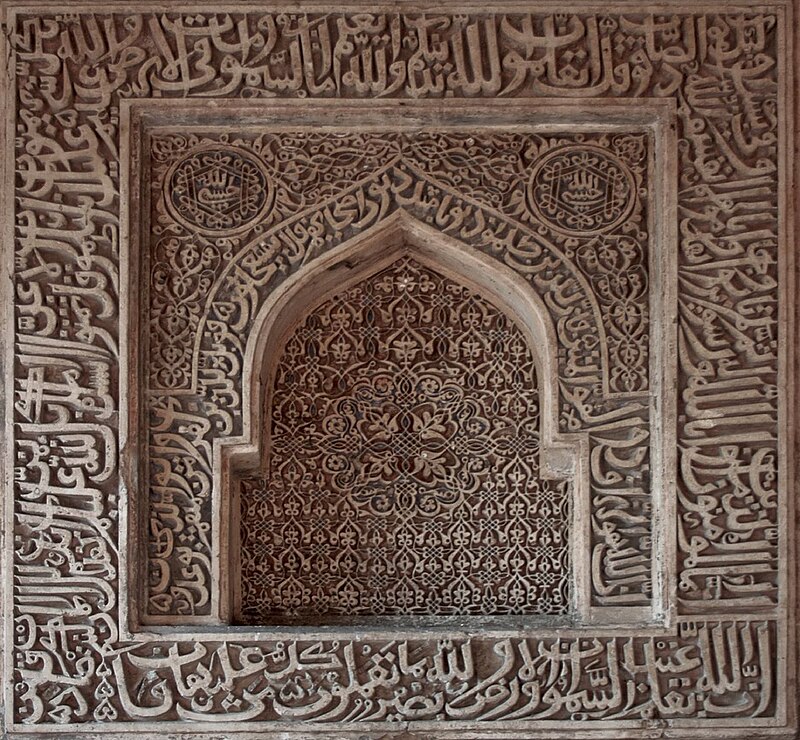
CARVING: Carving is a controlled cutting technique, requiring use of a
chisel and occasionally pounding by a hammer. Carving is associated with
fine but soft grain materials like ivory, horn, bones and wood. Carving is
also done to pliable metals like copper, silver-based alloys, and also hard
but fracture-able materials like stones.
 |
| Quran inscriptions on wall of Lodhi Garden Delhi |
ENGRAVING: Engraving is a delicate and shallower material removal
technique than carving, using a chisel or sharp pointed tools with hand
pressure, or very light pounding of the hammer. Engraving is today done
by fine rotary tools similar to the dentist’s pneumatic drill. A computer
controlled, diamond bit engraving is now also done to ultra thin
materials. In Intaglio, or Gravure, printing, the image to be printed is
etched or incised into the surface of the printing plate or cylinder.
Gramophone records have engraved and embossed grooves.
 |
| Glass engraving |
CHASING: For chasing, the material is depressed or displaced by a fine
tool as dots, small length linear-strokes or in continuous linear patterns.
Wet ceramic pieces, and plastered-surfaces are pattern rendered by
chasing. Braille writing on a thick paper sheet is a form of chasing.
Engraving and chasing techniques are frequently used to provide a matt
finish, onto normally very glossy stainless steel surfaces. Chasing
techniques are also used for relieving as well as introducing stresses
at the surface section, allow moisture and heat transfer, and improve the
ductility of the material.
 |
| The Treasure of Sânnicolau Mare in chasing technique |
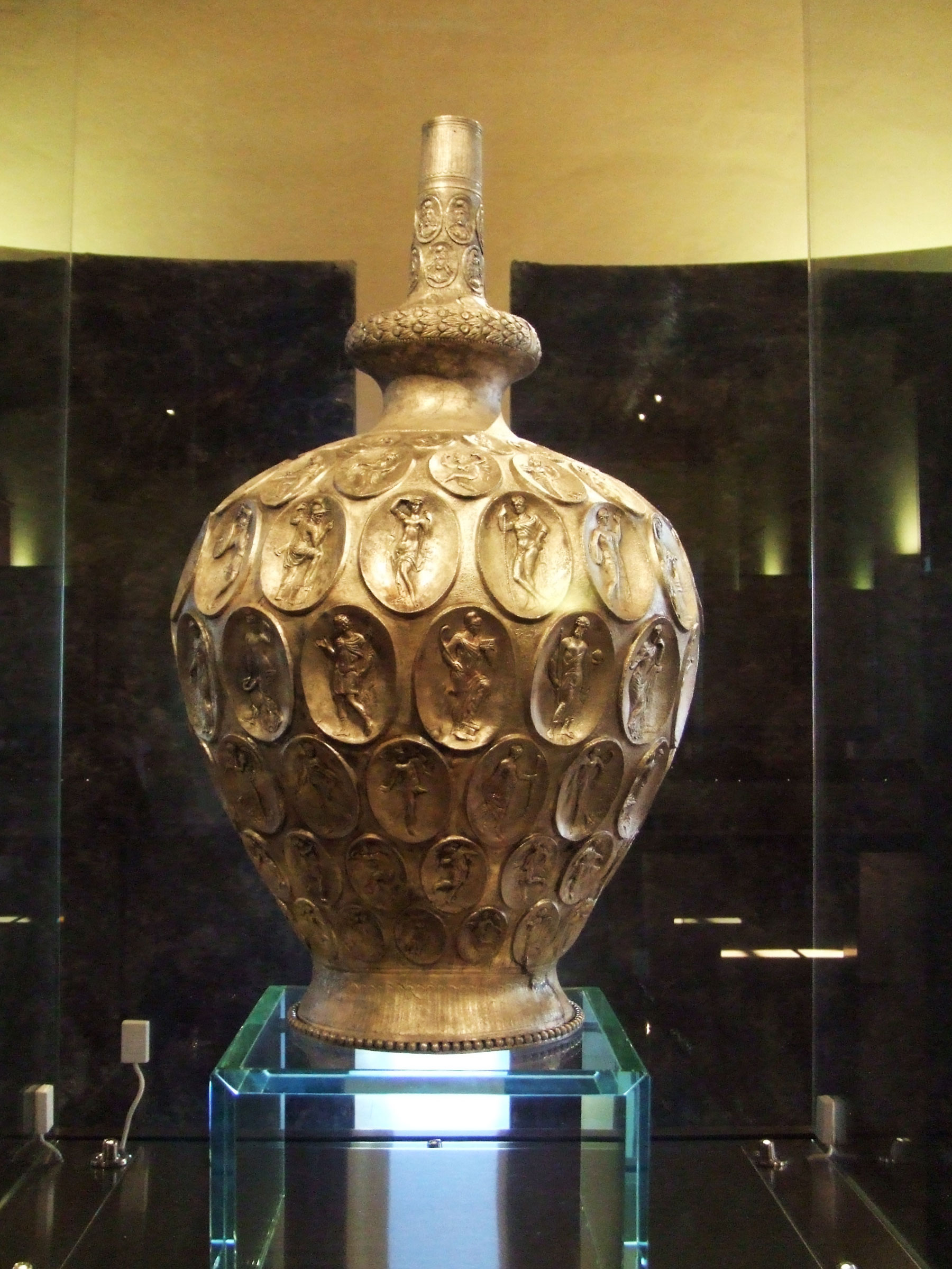
EMBOSSING: Embossing introduces a texture through pounding,
beating or by pressing of the surface. The pressure may be applied
from one face or both faces of a sheet, locally as spots, or continuously
under a plate or roller, creating repeat patterns or random designs.
Pounding or beating, compacts the surface-sections of the material,
and thereby increases its density and integrity. Embossing techniques
are used to reduce the gloss by matting the surface. Embossing is done
to increase the thickness bulk of very thin surface materials and make
them apparently stiffer. Synthetic fabrics and fibres are emboss-deformed
and permanently set (perma-set and texturizing) through heat or chemical
treatment.
 |
| Archaeological museum ( Piombino ). Amphore of Baratti ( 4th C AD ). |
REPOUSSE: Repousse is a method of raising a design in relief from the
reverse side. The design is first drawn on the surface of the
metal and
the motifs outlined with a tracer, which transfers the essential parts
of the
drawing to the back of the plate. The plate is then embedded face down
in an asphalt block and the portions to be raised are hammered down into
the soft asphalt. Next the plate is removed and re embedded with the
face
uppermost. The hammering is continued, this time forcing the background
of the design into the asphalt. By a series of hammering and
re-embedding, followed finally by chasing, the metal sheet attains the
finished appearance. There are three essential types of tools used: -for
tracing, -for bossing, -for chasing. Ornaments in relief are also
produced
by mechanical means. A thin, pliable sheet of metal is pressed into
moulds, between set of dies, or over the stamps. Embossed utensils of
copper and brass, statuettes of gods formed of thin silver and gold
plates
are very much part of every Indian house. Today Aluminium craft pieces
are similarly embossed and black anodized.
Traditional Indian Brass and copper utensils have hammered finish on the
outside. The same is often copied on aluminium utensils but reducing the
strength due to ‘cold working’ of the metal. Leather and paper surfaces
are rolled embossed to create textured patterns. Timber veneered
surfaces are pressed for texture creation. Rendering of a wet plaster face
by variety of pressing and chasing tools is very common. Chasing is very
common with copper and brass pots.
MATTING AND ETCHING: These are mainly used for creating textured
surfaces. Matting is generally a mechanical technique compared to
etching where a chemically active substance is used. Mating and etching,
are also achieved by metal removal processes (reversing the metal
deposition by changing the cathode charge) in the final stage of plating.
Parallel, crossed, irregular, concentric, circular and other geometric
configurations are carved or embossed on the surface. Line and spacing
between them are often less than 1/100 part of a millimetre, depending on
the compactness of the material mass. Another method of surface
decoration is to impress it with repeating patterns of hatched lines (used
on precious metals), thus matting or breaking up areas to contrast with
other areas left polished and reflective.
ETCHING: Etching is usually done by an active substance that will either
eat away part of the surface or change its colour quality. Acid and
alkali treatments also provide etched surfaces. Etching is also an artwork
technique. Glass surfaces are etched with Hydrofluoric acid.
SURFACE LEVELLING: Surface levelling is a major field of surface
finishing. Surfaces are levelled by chipping away very thin sections off the
surface. The material must have layered formation (e.g. layered stones,
wood, bamboo, cane) or fracturable or brittle constitution (e.g. stones).
Surfaces are ground and polished for a levelling.
GRINDING: Grinding removes material from the surface to roughen a
normally glossy surface like glass, or polishes a rough surface like stone.
Grinding requires material of higher hardness than the surface material,
and is done by rubbing down with a graded series of coarse to fine
abrasives, such as Carborundum, sandstone, emery, pumice, sand, glass
and diamond powders. Where a material constitution permits, very fine
grinding may polish the surface. Grinding is a cutting operation in
which each grit that comes in contact with the material cuts out a minute
chip, or swarf. Grinding wheels usually consist of particles of a synthetic
abrasive, such as silicon carbide or aluminium oxide, mixed with a vitrified
or resinoid bonding material. Grinding can be coarse or fine, depending
on the size of the grit used in the grinding wheel. Metal and glass can be
ground to a mirror finish and an accuracy of 0.0000025 cm.
 |
| Metal Grinding |
|
POLISHING, HONING, LAPPING, BUFFING: Polishing uses extremely
fine abrasive substances, such as jewellers rouge, Tripoli, whiting, putty
powder and emery dust to rub or burnish an extremely smooth and
brilliant finish on the surface of a material. The polishing materials are
coated on the surface of cloth, felt, leather, rubber pr polymer wheels or
as belts. Metal surfaces are levelled and finished by honing and lapping.
Honing removes less than 0.0125 millimetres of material from the surface
to eliminate micro scratches and machine marks from ground machine
parts. It is done with bonded abrasive sticks or stones that are mounted
in a honing head. Lapping is a process in which a soft cloth (wool, linen
and chamois-leather) impregnated with abrasive pastes (rubbing
compounds), is rubbed against the surface of a work-piece. Honing and
lapping, are essentially metal finishing techniques.
BUFFING is a term used for polishing of metals. Buffing is done with
polishing compounds and brushes of various shapes, and abrading
materials, like: (animal hair, synthetic fibres, plant fibres -coir), flex, wool
and leather. Barber polishing the razor on a leather stripe is a buffing
process that levels out small nicks on the blade. Utensils are buffed for a
polished surface.
LAPPING is used to produce a high-quality surface finish or to finish a
workpiece within close size limits. Dimensional tolerances of 0.00005
millimetres can be achieved in the hand or machine lapping of precision
parts such as gauges or gauge blocks.
SHAVING AND SPLITTING: Shaving is done to remove material’s
components such as outward hair or fibres, layers, etc. Leather surfaces
are shaved for thinning and to remove the surface hair. Leathers are also
surface split to separate leather suitable for uppers and soles. The palm
leaves are shaved to remove the stems and make them smoother for
writing. Tree-barks are removed by axes and choppers to retard insect
attack and increase moisture removal. Timbers are re-cut or planned with
finer tools to achieve a smoother surface. Timbers are split very finely to
create veneers. Wood planning is also a shaving technique. Carpets and
rugs require close shearing by scissors to shave of protruding fibres.

SINGEING: singeing is a controlled burning (or a heat treatment) at the
surface section to remove part of the material and to change the colour
or texture properties of the surface. Singeing is both a process of surface
finish and surface cleaning. Most of the organic materials can be
surface-treated directly with fire or indirectly with high heat to achieve a
singed or ironed effect. Textiles, paper, leather, leaves, wood, etc. are
some materials that can be burnished. High temperature singeing
removes the surface fibres and hair, and chars or burns (sinter) the top
part of the surface, creating a burnt colour + texture effect. Textiles are
Ironed, for de creasing or perma-set, or creased with pressurized heat
treatment. Synthetics or composite textiles are selectively or locally
singed to fuse the fibres or filaments, to create texturized effects, and also
alter the transparency, opacity, etc. Wood surfaces on flame treatment
attain a dehydrated or shrivelled-shrunk surface, similar to an old wood.
Metal surfaces also singed not only to harden or anneal the top surface
but to burn the oily residues, dehydrate, and descale the surface. Singed
metal surfaces often attain peculiar colour and pattern effects.
.


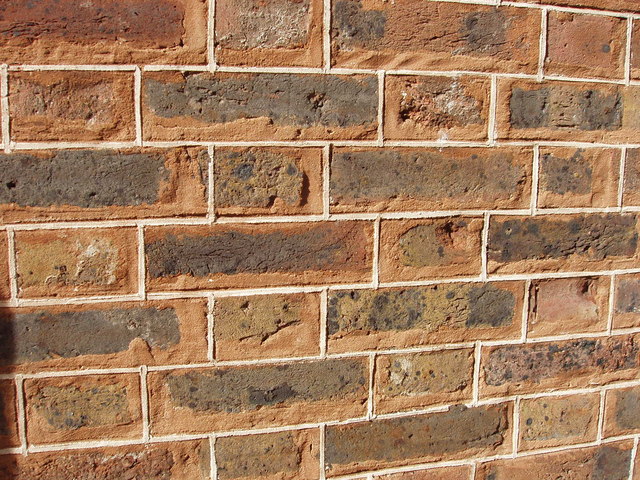
 ● Cement coatings’ finishes are in the form of cement paints
and high viscosity or bodied rendering formulations. Cement
paints have limited life of 3-5 monsoons and re-applicability of
5-7 coatings. Cement paints are alkaline materials and applied
on similar substrates, and as a result the colour range is mostly
of Oxides colours. Some blues and greens of darker range are
available. The chief problem is the process of adding the water,
which creates flocculation and aerated mass. Next problem is
application on a dried out substrates with chances of poor
adhesion and difficult brushing. Rendering formulations have
high viscosity, and the success usage relies more on the craft
of application.