Showing posts with label Timber. Show all posts

Sunday, July 12, 2015

SOME VARIETIES of WOODS of Indian subcontinent


SOME VARIETIES of WOODS of Indian subcontinent

Post 126 ⇒  by Gautam Shah ➔

. 

With quality woods getting scarce due to deforestation and restrictions on export and import, attention is now on low quality woods. These are few species that were till now used for low quality products and in rural areas. The species have individual drawbacks that need to need to be technologically handled. This is not an exhaustive list, many such species exist, and are used for specific products. Such species of wood are found across the Indian subcontinent (India, Pakistan, Bangladesh, Sri Lanka, Nepal) or geographically very large subregions of it. These are tropical varieties and may be found in similar climate zones in other parts of the world.
 
Neem Tree in Rajasthan India

NEEM (Azadirachta indica) is also known as Neem, Nim-tree, Sanskrit Nimba, or Indian Lilac. Neem is also called ‘arista’ in Sanskrit to mean ‘perfect, complete and imperishable plant.’ The Sanskrit word Nimba derives from ‘nimbati syasthyamdadati’ meaning ‘to give good health’. It is a tree in the mahogany family Meliaceae. Originally from Burma (Myanmar), but now found almost everywhere in Indian subcontinent, and Iran. It is now planted in parts of Africa and Australia. Neem trees can grow on village outskirts (Gochar or cattle grazing fields), farm borders, and roadsides, singly or as plantation. For the Cart Festival (Rath-Yatra) of Lord Jagannath at Puri, Orissa, India, Specific Neem trees are selected after religious ceremony, cut and used for statues and huge wood cart.
Praying before a tree prior to cutting for Lord cart for Rath-Yatra

Neem trees grow very fast in tropical climates. The tree grows to substantial maturity in a decade, and fully grown can be 12 to 18 mts. tall and can have trunk girths of 1.8 to 2.4 mts. It has a straight trunk and long spreading branches that forming a crown of 20 mts. across. The trunk and branches both offer good wood. It is an ever green tree, providing green leaf for fodder for sheep and goats, whereas its dry leaves and seeds provide organic fertilizer with biocide properties.
 
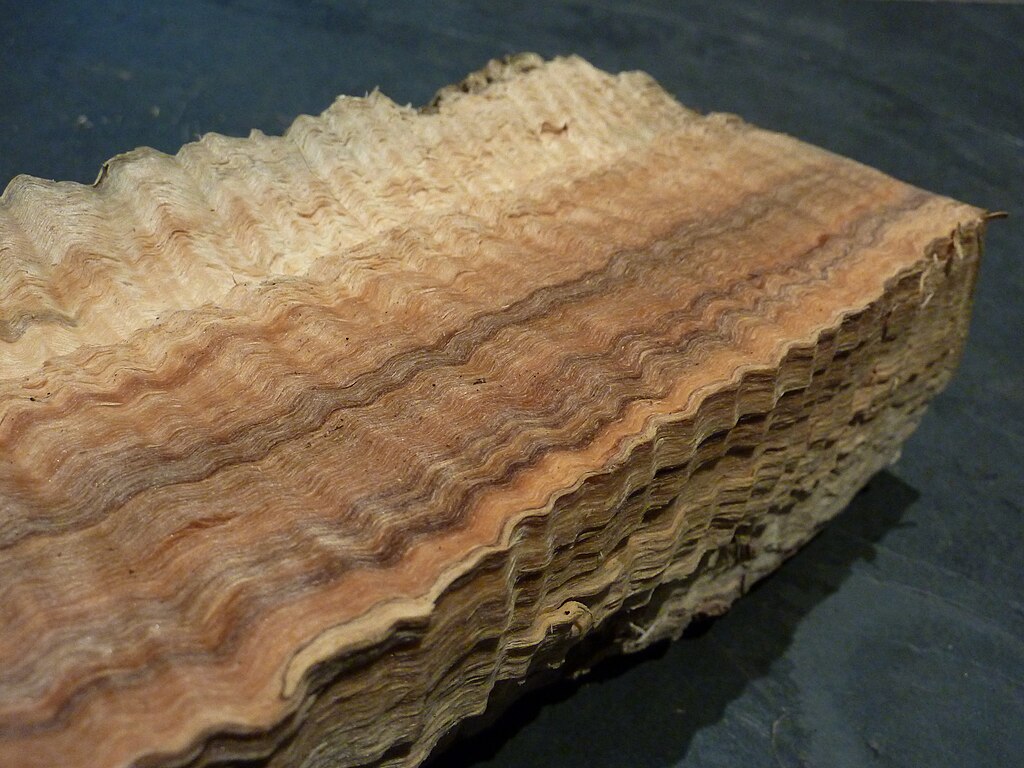
Grains of NEEM timber

The sap wood of Neem is of lighter colour and the heart wood resembles Mahogany, and is of darker reddish to brownish colour. The timber of a fresh cut is dripping wet, but once sawn begins to season well. After three years of natural drying, or plant-based seasoning, wood dries with shrinkage. Neem timber has medium density. It can be worked but its surface cannot take smooth finish, however it can be painted with suitable surface filling primer. The wood is hard, lustrous and aromatic.
 
Neem timber sawn sections

Neem wood was considered rural timber. It is better then Mango wood, due to the compact grain. Its superior toughness and resistant to moisture, termites, other insects like borers and fungi make it a favourite wood for farm implements, carts, house beams and columns, door and window frames, furniture like charpoys (country beds), cart, axles, ship and boat building, helms & oars, tool handles. It is now widely used for plywood making and as inserts in flush-doors and block-boards.
.

MANGO tree is of genus Mangifera, and belongs to the flowering plant family Anacardiaceae. Mango is a tropical tree, growing in many parts of the world in as many varieties. The English word mango representing the fruit, (pl. mangoes or mangos) originated from the Malayalam word manna via Portuguese during spice trade with Kerala in 1498.
Mango Tree
Mango Tree
Mango trees are grown in every part of India, as single a farm tree or as an orchid. Trees grow to a height of 35–40 mts., with a crown radius of 10 mts. The trees are fairly very sturdy, and bear fruit for very long time. The trunk girth is 1.50 mts. So provide large section of timber. The heartwood is mainly golden brown, to pale-whitish. Sapwood may not be very distinct. The grains are straight, interlocked, curly or mottled. The grains show coarse texture. Mango timbers have porous end grain, which restrict its use for lathe turned articles. Timbers with interlocked or wild grain have tear-out problems during planning or machining. Resins have a tendency to bind on the heated saw or planning blades. Some varieties have high silica content that can dull the cutting edges. 

Mango tree cut section of trunk 
 The timber is of light pale colour but with patchy irregular grains. The open ends of fibres show dark colour. Fresh mango timbers contain lots of moisture and sawn pieces if not properly held for storing and seasoning, have a tendency to warp. Constituent resins make it difficult to saw and plane the timer. Dry timber is very stable and durable. Mango is considered durable to perishable, but also susceptible to moisture, fungal and insect attack.

Mango timber grains
 Mango wood is easily available, and was fairly cheap. It has been truly a country wood used only for rural or farm implements. The wide trunk allows timbers for shelves, door planks, school bench tops, seats, and chair handles. Mango wood cannot have clear polish, mainly due to the irregular grains. Mango wood is used for wood stair and ladder steps when Ironwood or Sadad is not easily available.
.


Tuesday, July 22, 2014

WOOD FINISHES


by Gautam Shah ⇨

Woods are fashioned to a variety of finishes such as bark stripped, chopped, rough hewn, sawn, planned, sanded, etc. Finish for a wood depends on several factors.
1. Type of wood -soft or hard
2. Quality of wood -jungle, commercial or special, etc.
3. Portion of wood -sap inclusive or heart exclusive
4. Type of cut -quarter, rift, tangential or slab etc.
5. Section of cut -along, across or askew to the grain
6. Anatomical peculiarities -straight or cross grain, knots, shakes, pith
7. Presence of chemicals -aliphatic compounds, waxy and resinous substances
8. Environmental conditions
9. Type of feel (texture) required
10. Type of look (grain, pattern) required
11. Economics -cost and maintenance
12. Time available for process
13. Tools and technology available
14. Age of wood
15. Moisture content of wood
16. Proposed use

■ Rough finishes are cheaper, take less time to prepare and require simple tools and techniques. Some rough surfaces give better bondage to preservatives and coatings. Rough surfaces are good for moisture movement but are highly vulnerable to insect and bacterial growth. Rough finishes hide local defects such as stains, knots, ugly grains, fine cracks etc. 

■ Smooth finishes are costly, require finer tools and superior techniques. Smooth finish often give poor bondage to preservatives and coatings but one requires much lesser quantity for coverage. Such finishes do not collect dirt. Smooth finishes discourage bacterial growth as do the rough finishes. The timbers for smooth finish should have a fine grain pattern. Heart portions are much better for smooth finish then sap portions. Sap portions may however, be finished fairly smooth, provided are immediately covered with moisture proof coating. Hardwoods usually provide smoother finish and of permanent type then soft woods. Woods with resinous or oily substances generally have a natural smooth feel, however, if the substances are reactive or soluble in water or aliphatic solvents, may create problems during coating. Sisam and Rosewoods have oily or waxy face, which does not allow oil paints or varnish finish. Such woods need to be covered with very thin coatings based on solvent evaporation drying, like nitro cellulose lacquer. Timbers surfaces are flame charred or singed to provide slightly darker to black tone to selected areas. The flame is either `cool' capable of depositing carbon or `hot' to singe the surface.

Valence Parquet Wikipedia Image by Morburre

■ Colour of wood shows a wide range of variation. The colour, of the same kind of timber changes depending upon whether the surface is freshly cut or has been exposed. Both sapwood and heartwood change colour due to slight oxidation on exposure. Some timbers do show certain characteristic colours. Sapwood is generally lighter in colour than heartwood. This distinction may be well defined as in Chir. Sissoo and Kokko or somewhat less well defined as in Sal and Haldu. Some timbers like spruce, fir, etc. show such colour distinction between heartwood and sapwood. The colour of wood may be uniform. mottled or streaked. The colour may vary from creamy white (Deodar, Birch) to jet black (ebony, mahogany) through varying shade of grey (oak), yellow (Haldu), pink (Lali, Pali), red (Walnut, Sisam), brown (Teak) and purple (Rosewood). In general, a darker colour in wood indicates greater durability because of the presence of natural toxic substances. 


■ Grain in timber refers to the general direction or alignment of wood cells. Depending on the actual alignment, the grain may be straight, spiral, interlocked, wavy or irregular. The nature of grain considerably affects the strength, seasoning and other properties of timber. Grain if not straight is a defect in timber. Straight grains usually occur in normally grown or in planned plantation trees. Particular type of grains many commonly are found in some species, like interlocked grain in Sal. Spiral grain is a natural defect due to the irregularities in the formation of the fibres themselves. This may make conversion difficult and also reduce the strength of timber. Timbers in which the grain changes direction to left and right more or less regularly have erratic grains. When radially cut this may produce beautiful figures and is useful for veneering. Wavy grain is produced by undulations in the wood. This weakens the timber, but many times it is valuable for the beautiful figure on the cut surface.

 ■ Texture of a timber depends on the size and variation of cells, dimensions of vessels and the width and abundance of rays. Timbers with large vessels and broad rays have coarse texture. Trees growing in favourable conditions and having faster growth has larger cells and is less compact than trees growing in a difficult terrain and adverse climate. Softwoods have marked variation in rings due to severe seasonal climatic alterations, and consequently on drying show uneven texture. Softwoods generally have fine feel due to presence of resinous substances. A moist wood, if planned has coarse texture, due to the rise or uprooting of fibres on further evaporation. Similarly an old timber which is very dry tends to be brittle at edges. A fresh wood may provide smooth feel due to the presence of oils, waxes and moisture, compared to an old wood which may feel dry and less smooth due to micro pores on the surface. 

■ Performance of a timber is measured in terms of its strength, durability, stiffness, toughness, colour, texture, size, availability, weight and moisture characteristics. Timber has certain disadvantages in comparison with other structural materials. Its size is limited to the width of a tree trunk. Quality is rarely uniform even within a section. It is susceptible to decay. Its greatest strength lies in the longitudinal direction that is along the grain, whereas it is comparatively weak across the grain. Though some wood show excellent shear resistance across grain. Fast-growing trees which can provide an easy renewable source of supply provide timber of poor structural or aesthetic qualities. A substantial part of a tree is lost in making timber for appropriate use. 
.

BERNARDO BELLOTTO

  BERNARDO BELLOTTO Post -376 SUNDAY Feature on ART of Architecture -by Gautam Shah BERNARDO BELLOTTO (1720-1780) was born in Venice (d...